 MS Inkjet
BACKTRACK
High-speed variable-data printing from the bottom up. Print unique information directly onto previously inaccessible surfaces — then read, verify and connect each product to its digital record.
Discover BACKTRACK ↓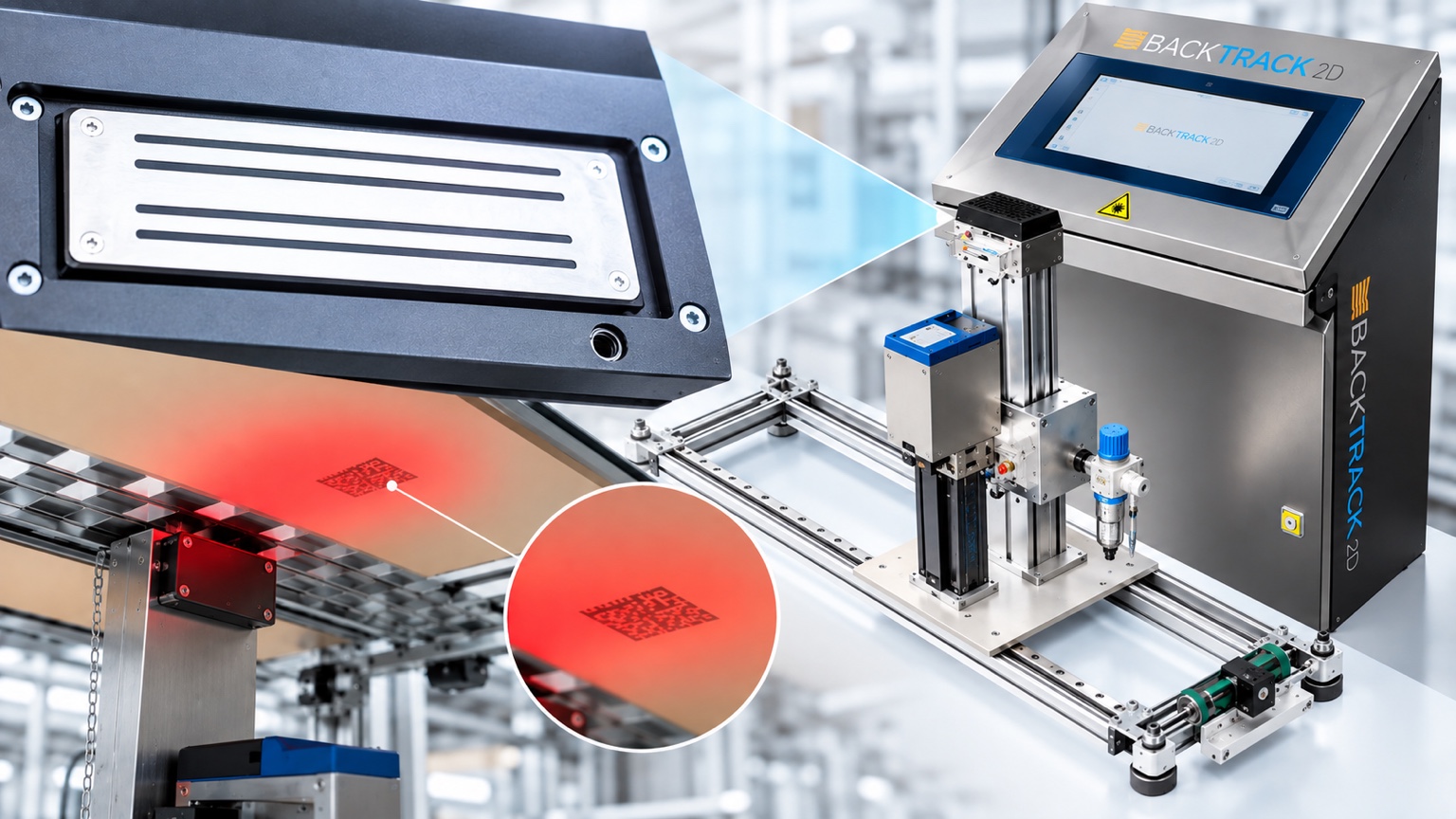
Print where conventional systems cannot.
Most industrial inkjet systems print from above or from the side. BACKTRACK prints upwards.
This transforms the unused underside of a product into a digitally printable surface — without changing its visible face or adding a label.
printable
surface.
The underside is often unused, protected and ideally positioned for permanent identification and machine-readable information.
More than printing. Give every product its own digital identity.
BACKTRACK can print unique information for every individual product. Readers positioned through the production process can identify and verify that product, connecting the physical item with production, quality and traceability data.
CREATE
Generate a unique identity or variable dataset.
Apply it directly to the product from underneath.
READ
Recognise the individual item downstream.
VERIFY
Confirm the identity is present and readable.
CONNECT
Link the physical product with production data.
One printed identity. Many possibilities.
TRACE
Follow individual products through production and the supply chain.
VERIFY
Confirm the correct identity has been printed and can be read.
CONNECT
Link products with production records, databases, MES, ERP or Cloud services.
AUTHENTICATE
Support provenance and product-authentication strategies.
INFORM
Connect operators or customers to specifications, instructions and digital information.
Every tile can have its own identity.
In ceramic production, a unique machine-readable code can be printed on the reverse of each tile. Readers can recognise the individual tile as it moves through production, allowing its identity to remain associated with the process.
But BACKTRACK is not limited to ceramics.
High-speed performance. Open architecture.
BACKTRACK is a configurable industrial inkjet platform. Printhead, ink, print width, resolution, number of heads, readers and integration are selected around the application.
Open printhead architecture
*Actual speed, print width, resolution and ink compatibility depend on the selected printhead, ink, substrate and application configuration.
What could you connect to your product?
Tell us about your product, production speed and the information you need to identify, trace or connect.
MS Inkjet — UK Agent